Best Convection Vaporizers 2026: Top 10 Compared
Best Convection Vaporizers 2026: Top 10 Compared
| VGear | from 407.83 € incl. shipping | Go to Shop |
| VGoodiEZ US | 435.31 € incl. shipping | Go to Shop |
Convection means: hot air flows through the herb without touching it. The result is aromatic, cooler vapour — and virtually no combustion between draws. That said, convection devices are more demanding to use than conduction devices, and they cost more. We have picked out the ten best models of 2026 — tested with a medium-fine grind, session and on-demand workflows, and a direct comparison against our conduction and hybrid references.
Which Convection Vaporizer Suits Which Use Case?
| Who is it for? | Our recommendation | From | Type |
|---|---|---|---|
| Daily driver, uncompromising quality | Tinymight 2 | 310.49 € incl. shipping | On-Demand |
| Butane ritual, maximum durability | Vestratto Anvil | 218.90 € incl. shipping | Butane |
| Design enthusiast, app user | Firefly 2+ | 179.00 € incl. shipping | On-Demand |
| Entry into convection under £150 | Fenix NEO | 125.00 € incl. shipping | Session |
| Most affordable genuine convection vapour | Smono 3 | 85.00 € incl. shipping | Session |
| Fastest heat-up under £100 | XMAX V4 Pro | 85.49 € Code VAPOCHECKER10 · incl. shipping | Session |
Our Top 10: The Best Convection Vaporizers
1. Tinymight 2 — Best Portable All-Rounder
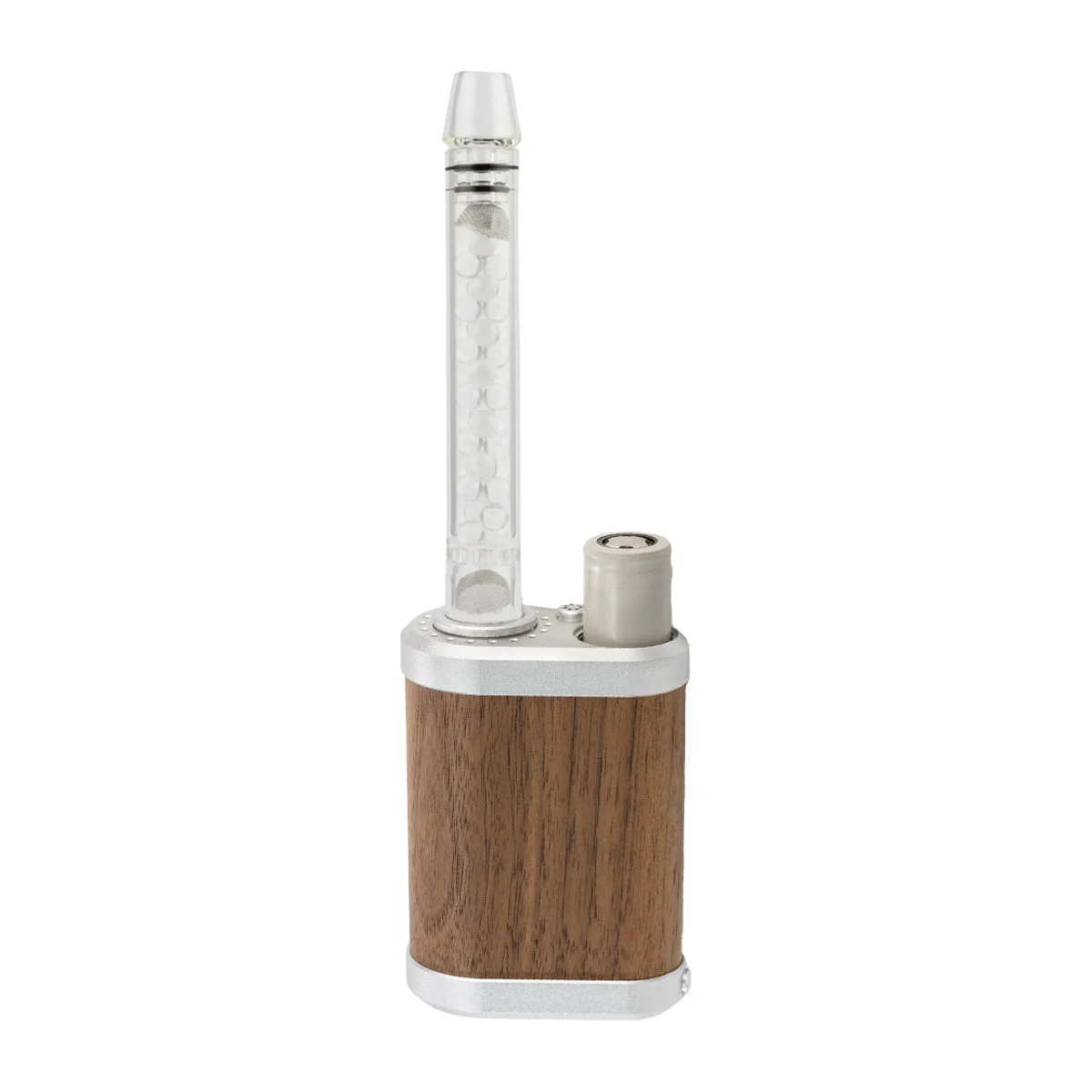
The Tinymight 2 from Finland is the benchmark for portable convection vapour. Inhale, and within three seconds the vapour is ready — genuine on-demand, with no reheating or combustion between draws. At higher settings, cloud density rivals desktop devices.
The air flows through a stainless steel chamber and glass vapour path — no plastic between herb and mouth. The swappable 18650 battery makes this handcrafted wooden device practically limitless in use.
- ✅ Best on-demand convection experience in its class
- ✅ Desktop-level cloud density, terpene-rich flavour
- ✅ Swappable 18650 battery, on-demand and session modes
- ❌ Draw technique learning curve — not plug-and-play
- ❌ Vapour runs hot, cooling unit requires frequent cleaning
- Heating: Convection | Battery: 18650, swappable | Heat-up time: ~3s (on-demand + session)
- Price: 310.49 € incl. shipping
→ Tinymight 2 price comparison
2. Tafée Bowle — Best Flavour

The Tafée Bowle is, for many testers, the best-tasting portable of all: 100% convection through inert materials delivers desktop-level aroma. The on-demand heater is ready in one to two seconds — hardly any device starts faster.
The magnetic stem with ceramic dosing capsules detaches tool-free, and the enormous battery carries 12 to 20 sessions. The cup-shaped aluminium construction (made in Canada) is first-class — though it is the most expensive device on the list.
- ✅ Flavour leader among portables (100% convection)
- ✅ Heat-up in ~1–2 seconds, genuine on-demand
- ✅ Enormous battery (12–20 sessions), premium build quality
- ❌ Most expensive device on the list, non-removable battery
- ❌ Cup shape — more of a home device than a pocket device
- Heating: Convection (100%) | Battery: 5,000 mAh, fixed | Heat-up time: ~1–2s (on-demand)
- Price: 449.00 € incl. shipping
→ Tafée Bowle price comparison
3. Firefly 2+ — Best On-Demand Convection

The Firefly 2+ is regarded as the flavour reference in its class. Dynamic convection heats only during the draw; the fully glass vapour path delivers fresh, terpene-rich aromas that conduction devices simply cannot match.
Because nothing is cooked between draws, the device is extremely material-efficient — ideal for microdosing. The removable battery charges fully in around 45 minutes.
- ✅ Flavour reference thanks to glass vapour path
- ✅ Genuine on-demand response, very material-efficient
- ✅ Removable battery, quality magnesium chassis
- ❌ Heavily draw-technique-dependent, noticeable learning curve
- ❌ Modest battery life — flavour over cloud production
- Heating: Convection | Battery: swappable | Heat-up time: ~3s (on-demand)
- Price: 179.00 € incl. shipping
4. Vestratto Anvil — Best Mechanical Convection

The Vestratto Anvil demonstrates that top performance is possible without electronics: purely mechanical, butane-powered, with no charging time or battery degradation. The high thermal mass delivers dense, heavy-hitting clouds and a session window of around 60 seconds — suited to group use.
Swappable chambers switch between flavour-focused and maximum-performance modes; the build quality (North America) is excellent. The butane handling and audible ready signal do, however, take practice.
- ✅ Completely independent of mains and battery (butane)
- ✅ Dense, heavy-hitting clouds, ~60s session window
- ✅ High-quality construction, swappable chambers
- ❌ Learning curve — incorrect flame risks combustion
- ❌ ~45s heat-up time, external butane torch required
- Heating: Convection (butane) | Battery: none (mechanical) | Heat-up time: ~45s (on-demand)
- Price: 218.90 € incl. shipping
→ Vestratto Anvil price comparison
5. XMAX V4 Pro — Best Value for Money

The XMAX V4 Pro performs at a level that typically costs three to four times as much. Clean glass convection vapour through an insulated path, plus a swappable 18650 battery — swapped in seconds for virtually unlimited runtime.
Dual mode (on-demand and session) plus three-stage airflow covers both casual and heavy users. The colour OLED allows degree-precise control; the temperature display runs slightly hot in practice, so it is worth setting it conservatively.
- ✅ Performs at 3–4× its price point (value-for-money winner)
- ✅ 18650 swappable battery, on-demand and session modes
- ✅ Clean glass convection vapour, colour OLED
- ❌ Small chamber, build feel is not premium
- ❌ Pure convection requires some draw technique
- Heating: Convection | Battery: 18650, swappable | Heat-up time: ~11s (on-demand + session)
- Price: 85.49 € Code VAPOCHECKER10 · incl. shipping
→ XMAX V4 Pro price comparison
6. Wolkenkraft FX Mini Ultra — Best Compact Convection

The Wolkenkraft FX Mini Ultra is one of the smallest genuine convection devices and fits entirely in the palm of your hand. A titanium chamber and glass mouthpiece deliver pure, flavour-forward vapour; the draw is notably open and effortless.
The small chamber is herb-efficient, USB-C charges quickly, and there is a five-year warranty. For long group sessions, the limited capacity is the trade-off of the compact form factor.
- ✅ One of the smallest genuine convection devices
- ✅ Pure flavour (titanium chamber + glass), open draw
- ✅ 5-year warranty, USB-C fast charging
- ❌ Very small chamber, frequent reloading required
- ❌ Limited battery life (~6–8 short sessions)
- Heating: Convection | Battery: fixed | Heat-up time: ~25s (session)
- Price: 114.89 € incl. shipping
→ Wolkenkraft FX Mini Ultra price comparison
7. Fenix NEO — Most Affordable Convection Entry Point

The Fenix NEO brings genuine convection into the entry-level category. The insulated air path (titanium chamber, zirconia) produces clean vapour of the kind usually found only in more expensive devices — surprisingly rich even at low temperatures.
Operation and the OLED display are beginner-friendly, USB-C fast charging and a large 3,000 mAh battery ease the typical convection weakness. It remains a pure session vaporizer with no on-demand mode.
- ✅ Genuine convection at an entry-level price
- ✅ Clean vapour through insulated air path (titanium/zirconia)
- ✅ Beginner-friendly, USB-C, large 3,000 mAh battery
- ❌ Non-removable battery, small chamber
- ❌ Session-only — no on-demand mode
- Heating: Convection | Battery: 3,000 mAh, fixed | Heat-up time: ~25–30s (session)
- Price: 125.00 € incl. shipping
8. Smono 3 — Most Affordable Glass Convection
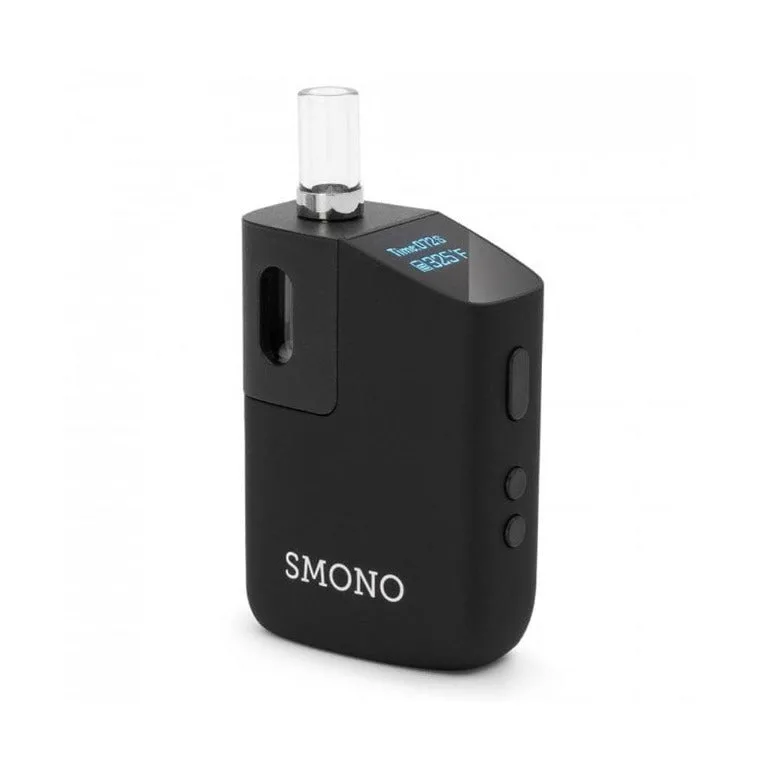
The Smono 3 is the most affordable genuine glass convection vaporizer on the list and is made in Germany. The glass mouthpiece above the stainless steel chamber delivers pure, unadulterated flavour — the consistent praise point in virtually every review.
Operation is as simple as it gets (OLED display, fast ~25s heat-up time, very open draw), and the price is unmatched. The fixed battery only lasts two to three sessions — making this a clear entry-level or occasional-use device.
- ✅ Pure flavour through glass vapour path
- ✅ Outstanding value for money, very simple operation
- ✅ German manufacturer
- ❌ Fixed battery — only 2–3 sessions per charge
- ❌ Small chamber, cloud density below premium level
- Heating: Convection | Battery: fixed | Heat-up time: ~25s (session)
- Price: 85.00 € incl. shipping
9. Epicvape E-Nano NXT — Best Desktop Flavour at a Budget Price

The Epicvape E-Nano NXT is a handcrafted desktop log vape that delivers pure convection flavour at a fraction of the cost of pricier desktop devices. It is extremely efficient and reliably vaporizes microdoses from around 0.02 g — the king of microdosing.
Each body is turned from solid wood; three years’ warranty (lifetime on the heating element) makes it a purchase for life. The NXT version improves stability and heat management. It is operated via whip and a rotary dial with no display.
- ✅ Desktop flavour at a budget price, king of microdosing
- ✅ Handcrafted solid wood, 3-year warranty (heater: lifetime)
- ✅ NXT update: more stable, cooler internals
- ❌ Stationary (mains-powered), no display
- ❌ Whip operation with a learning curve
- Heating: Convection (desktop) | Power: mains | Heat-up time: short (on-demand)
- Price: 148.42 € other regions
→ Epicvape E-Nano NXT price comparison
10. Arizer XQ2 — Most Versatile Desktop

The Arizer XQ2 (successor to the cult Extreme-Q) offers balloon and whip in a single device — quick whip sessions in the morning, relaxed balloon use with company in the evening. That flexibility is rare in a desktop at this price point.
The ceramic convection heater plus borosilicate glass consistently delivers aromatic vapour, controlled via remote control with three fan speeds. Regarded as the best desktop under £200, it is seen as an affordable Volcano alternative.
- ✅ Balloon and whip in one device, remote control included
- ✅ Best desktop under £200 (Volcano alternative)
- ✅ Aromatic vapour, wide temp range (50–260 °C)
- ❌ Stationary and bulky, fragile glass
- ❌ 3–5 minutes heat-up and fill time
- Heating: Convection (desktop) | Power: mains | Operation: balloon + whip, remote control
- Price: 161.00 € incl. shipping
Also Worth Considering
These devices narrowly missed the top 10 but are clear recommendations for the right audience:
- Sticky Brick (Flip Brick / Runt): Butane convection in glass and wood, no electronics — first-class, full flavour and virtually indestructible. Steep learning curve. For aroma purists.
- 7th Floor Silver Surfer (SSV): Desktop convection cult classic (Made in USA), very robust, excellent vapour — analogue dial only, no digital control. For longevity-focused home users.
- Healthy Rips Rogue 2: fast, dense clouds, strong battery life and outstanding value for money — but operates as a hybrid (convection + conduction) and therefore strictly belongs in our Hybrid Best List. For everyday users who prioritise speed over ultimate flavour purity.
Convection vs. Conduction: What’s the Difference?
Conduction heats the herb through direct contact with the heating plate, while convection heats only the air passing through it. Conduction is faster and simpler, but the material keeps heating even when you’re not drawing. Convection avoids combustion between draws and delivers more aromatic vapour, but demands greater technical complexity and longer heat-up times for session devices. Hybrid devices combine both principles and are the most common category in the mid-price segment.
When Is a True Convection Vaporizer Worth It?
A true convection vaporizer isn’t automatically worth it — it pays off only in certain usage situations. Convection is not automatically better — it is a different usage paradigm. Anyone who does short sessions daily, has no flavour focus, and values maximum simplicity is often better served by a hybrid or conduction device. Convection pays off in these four scenarios:
Flavour purists: Anyone who wants to taste terpenes — citrus, pine, or floral notes that often evaporate during the initial heat-up phase with conduction — needs convection. The Tinymight 2 and the Firefly 2+ deliver the best results here, because the draw itself determines the temperature.
On-demand users: Anyone who only wants two or three draws in between wastes material with session devices (which keep burning). True on-demand convection — Tinymight 2, Firefly 2+, and the Tafée Bowle — produces vapour only during the draw and saves 30–40 % of herb per chamber fill.
Medical users: Anyone who depends on consistent cannabinoid yield (dosing) benefits from the reproducible airflow. The Pomahacova study empirically demonstrates this for the Volcano — portable convection delivers similarly consistent results when grind size and chamber fill quantity are correct.
Ritual enthusiasts: Anyone who loves the process — lighting a torch, positioning the flame, finding the draw rhythm — will find a mechanical honesty in butane convection (Vestratto Anvil) that electronic devices cannot offer. No battery stress, no firmware updates, just material and air.
What to Look for in Convection Vaporizers?
Draw resistance is the most important factor: convection devices need a slow, steady draw. Drawing too fast cools the air down and produces little vapour; drawing too slowly risks overheating or combustion. Most devices on this list have an optimised airflow for this, but a certain learning effect remains. Rule of thumb: draw duration approximately 8–12 seconds, speed like sipping a thick milkshake through a straw.
Grind size: Convection works best with a medium-fine to coarse grind. Too fine clogs the airflow, too coarse gives weak vapour. A good middle ground is the consistency of coarse salt. Particularly important: do not overfill the chamber — 60–80 % of chamber capacity is optimal.
On-demand vs. session: On-demand devices like the Tinymight 2 only heat when drawing — ideal for individual draws in between. Session devices like the Fenix NEO maintain a constant temperature for longer sessions. Both have their place — on-demand saves material, session is more sociable and relaxed to use.
Frequently Asked Questions
Are convection vaporizers better than conduction vaporizers?
Not categorically. Convection delivers purer flavour and does not burn material between draws. Conduction is easier to use, faster, and cheaper. For flavour purists, convection is the better choice; for beginners, conduction or a hybrid device is often a better compromise.
Why are convection vaporizers more expensive?
The heating element is technically more complex. Air must be heated evenly and controlled precisely — that requires better materials and sensors. Exceptions such as the Smono 3 show that it can be done affordably, but the vapour quality of the top devices is difficult to match.
Can I use a convection vaporizer with concentrates?
Most convection devices are designed for dry herbs. Some models such as the Tinymight 2 or the Firefly 2+ offer concentrate inserts as accessories, but their core strength lies with dry herb. Users primarily using concentrates are better served by dedicated dab pens or desktop devices such as the Volcano Hybrid.
Which convection vaporizer is suitable for beginners?
The Smono 3 or the Fenix NEO. Both have a forgiving airflow and an OLED display with a clear temperature readout. Before moving on to a Tinymight 2 or Firefly 2+, you should get to know a more affordable convection device to learn draw technique — otherwise a great deal of potential is lost.
How do I clean a convection vaporizer?
Soak glass vapour paths in isopropanol (90 %+) for at least 30 minutes, then rinse with hot water and leave to air-dry. Wipe the stainless-steel chamber with cotton buds and isopropanol — no dishwasher. Replace screens every two to three weeks or soak them in iso. Daily users should clean every seven to ten days — otherwise airflow and vapour quality noticeably deteriorate.
How long does a convection vaporizer last?
Electronic devices with replaceable batteries (Tinymight 2, XMAX V4 Pro) last eight to twelve years — the batteries are the wear part, the device itself barely at all. Butane convection (Vestratto Anvil) has virtually no wear parts apart from O-rings and lasts for decades. Devices with a fixed battery (Firefly 2+, Fenix NEO) are barely usable after three to five years due to battery degradation.
All Best Lists at a Glance
- Best Vaporizers: Under 50 EUR
- Best Vaporizers: Under 100 EUR
- Best Vaporizers: Under 150 EUR
- Best Vaporizers: Under 200 EUR
- Best Vaporizers: Desktop
- Best Vaporizers: Hybrid
Best Lists by Experience Level
- Best Vaporizers for Beginners 2026
- Best Vaporizers for Intermediate Users 2026
- Best Vaporizers for Experts 2026
Price History
Which convection vaporizer is the best?
It depends on your intended use. The Tinymight 2 suits portable on-demand convection, the Firefly 2+ suits app control and design, and the Vestratto Anvil suits mechanical butane convection without electronics.
Which convection vaporizer for beginners?
Smono 3 or Fenix NEO both work well as beginner convection devices. Both have a forgiving airflow and an OLED display.
Can I use concentrates with convection?
Yes, but only with a few models that have matching accessories. Most convection devices are designed for dry herbs. The Tinymight 2 and Firefly 2+ are among the exceptions that offer concentrate inserts as accessories.