Prices tracked daily across 100+ shops. Last reviewed: March 2026.
Arizer Air Max vs Solo 3: Which Arizer?
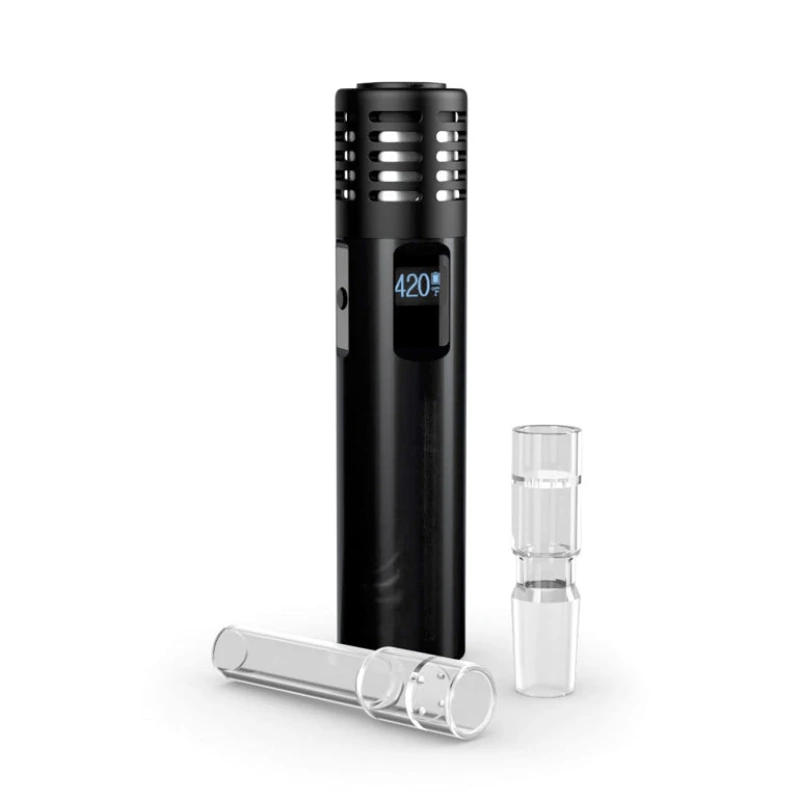
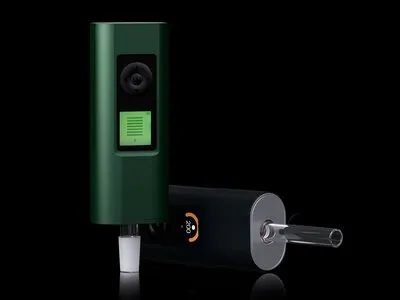
Two Arizer siblings compared: Air Max from ~€125 and Solo 3 from ~€153. Both use the iconic glass stem, both have replaceable 18650 batteries. Where are the differences?
Specifications
| Specification | Air Max | Solo 3 |
|---|---|---|
| Heating | Hybrid | Hybrid |
| Max temperature | 220 °C | 220 °C |
| Heat-up time | ~60 seconds | ~15 seconds |
| Battery | 5000 mAh (replaceable) | 5000 mAh (replaceable) |
| App | No | Yes (Bluetooth) |
| Form factor | Slimmer (pen-like) | Wider (cylindrical) |
| Price from | ~€125 | ~€153 |
| Shops | 59 | 56 |
Design and handling
The Air Max is slimmer and lighter — shaped like a thick pen, it fits narrow pockets. The Solo 3 is cylindrical and sits more stably in hand but needs more space. Both use the same 14mm glass stem vapor path.
Heat-up time: the key difference
15 seconds vs 60 seconds — the Solo 3 heats four times faster. This makes a real difference day to day. The Air Max compensates with a lower price (~€28 less) and slimmer form.
App vs no app
The Solo 3 offers Bluetooth control via the Arizer app: custom temperatures, session timer, boost mode. The Air Max only has physical buttons. If you don’t need the app, save with the Air Max.
Battery and Charging
This is the decisive difference: the Air Max has a replaceable 18650 battery, the Solo 3 has a built-in one. This has significant implications for daily use. If you are frequently on the go, the Air Max lets you simply swap in a spare battery — zero charging time. The Solo 3 needs a cable.
Both charge via USB-C, which is an upgrade from the Micro-USB predecessors. The Solo 3 charges from empty to full in about 90 minutes. The Air Max charges a single battery in about 2 hours, but with an external 18650 charger and spare batteries, that becomes irrelevant.
Longevity is another factor: after 300-500 charge cycles, every Li-Ion battery loses capacity. With the Air Max, you swap the 18650 for under €10. With the Solo 3, you would need to send the device in or solder the battery yourself — voiding the warranty. For users planning to keep their vaporizer 5+ years, the Air Max is the more sustainable choice.
Vapor Quality
Both use Arizer’s signature glass stems — the gold standard for flavor purity. Air flows through a ceramic heater, through the herb in the glass stem, directly to your lips. No plastic, no metal in the vapor path. Flavor is identical at the same temperature. The Air Max reaches set temperature noticeably faster — first draws produce full clouds sooner.
Cleaning and Maintenance
Identical process: soak glass stem in isopropanol, rinse, done. The ceramic chamber barely gets dirty. Replacement stems cost €5-12 and are universally available. Minimal maintenance, virtually no ongoing costs — just an occasional new stem every few months.
Who should buy which?
Air Max: Budget under €130, maximum portability wanted (slim form), app control not needed. Same vapor quality as the Solo 3.
Solo 3: Faster heat-up (15s vs 60s) matters, app control wanted. The ~€28 premium is worth it for the speed boost.
Size, materials, and bowl volume
Solo 3 stays the compact Arizer portable. The body is roughly thirty percent shorter than the Air Max, the weight sits near 210 grams, and the glass aroma tube slides almost flush so you can pocket it without babying the device. At around 180 EUR it is the Arizer you can toss in a bag without worrying about a bulky shell or dented metal.
Air Max behaves like a travel friendly desktop. The aluminum chassis is thicker, the single 26650 battery and bigger heater push the weight toward 320 grams, and the oven holds close to 0.25 grams versus the Solo 3 load of roughly 0.15 grams. That extra space keeps the Air Max steady when you fill balloons or drive through a water pipe adapter for longer living room sessions.
Heat up and controls
Solo 3 hits its target in about twenty seconds. The glass stem acts as both bowl and mouthpiece, so you grind, tamp, slide it in, and sip almost immediately. The screen and three button cluster mirror Arizer desktop menus, but in daily use you mostly need the plus button to pick a preset and the start key to engage Boost mode for a quick finish.
Air Max needs close to a minute because the larger heater is tuned for dual use. In return you can push temperature steps directly from the Arizer Remote app, program session timers, and trigger fan assisted balloon fills without touching the device. The draw remains easy thanks to the enlarged air intakes, so high airflow stems and bag mode both feel calmer than they should in a portable chassis.
Portable versus home comfort
Treat the Solo 3 as the true grab and go option. It is shorter, it keeps all the heat inside the removable glass stem, and the twenty second heat up means you can sneak in a session during a walk or outside the venue without the ritual feeling slow. Even the glass aroma tubes are easier to pre pack because the bowl is shallower and likes a tighter tamp.
At home the equation flips quickly. Air Max accepts both long stems and the stock WPA, fills balloons straight from the heater, and rides the couch with a heavier base that will not tip when a hose tugs on it. The larger bowl shines with dry herb sharing because you can stir mid session, refire the heater with the app, and still have dense vapor twenty minutes later.
Buying advice
The price gap is roughly 60 EUR in most EU shops. Solo 3 gives you faster warm ups, a leaner chassis, and the lower sticker, so it is the better pick if you need a daily commuter or want to pair the device with Arizer glass stems you already own. The vapor quality is on par because both use the same stainless heater and glass air path.
Pick the Air Max if your sessions happen on the sofa, if you want balloons or water pipe fun without buying a desktop, or if the Arizer Remote app workflow appeals to you. It is heavier and slower, yet the dual use personality, bigger bowl, and app automation justify the 240 EUR ask for anyone who vapes more at home than on the street.
Overview of all 29 comparison articles — find the perfect device for you.
Frequently Asked Questions
Daily Use and Practicality
In everyday use, heat-up time shapes your routine more than any spec sheet suggests. The Solo 3 V2 reaches operating temperature in 15 seconds, while the Air MAX needs 60 seconds. That difference adds up over weeks of daily sessions. Quick morning sessions before work favor the faster device; relaxed evening sessions make the gap irrelevant.
Consider your typical usage pattern. If you vaporize 3-5 times daily, a few seconds per session compound into meaningful time savings. If you have one session per evening, both devices serve equally well. The Solo 3 V2 rewards impulsive, grab-and-go use. The Air MAX rewards users who plan their sessions.
Build Quality and Materials
The Air MAX: Durable polymer body with all-glass vapor path. Arizer devices are manufactured in Canada with a focus on simplicity and reliability. The glass stems are the signature feature: easy to clean, flavor-neutral, and available in multiple lengths. Build quality is consistently high across the product line.
The Solo 3 V2: Durable polymer body with all-glass vapor path. Arizer devices are manufactured in Canada with a focus on simplicity and reliability. The glass stems are the signature feature: easy to clean, flavor-neutral, and available in multiple lengths. Build quality is consistently high across the product line.
Battery Strategy in Detail
The Air MAX packs 5000 mAh, the Solo 3 V2 has 5000 mAh. The larger battery does not always mean longer runtime — heating method, chamber size, and usage pattern all affect real-world endurance. Both devices manage 5-8 full sessions on a charge under normal conditions.
Both have swappable 18650 batteries. Spare cells are cheap and extend both devices lifespan by years.
Water Pipe Compatibility
Both devices support water pipe use. Water filtration cools the vapor and makes higher temperatures more comfortable. WPA adapters (14mm and 18mm joints) are available for both the Air MAX and Solo 3 V2. Combining a vaporizer with glass elevates the experience significantly.
Cleaning and Maintenance
Regular cleaning directly affects vapor flavor and device longevity. Both the Air MAX and Solo 3 V2 benefit from weekly isopropyl alcohol soaks of removable parts. Screens and seals are consumable items that should be replaced every few months for optimal performance. A basic cleaning kit consisting of isopropyl alcohol (90 percent or higher), cotton swabs, and pipe cleaners covers most devices.
A clean device delivers noticeably better flavor than a neglected one. Most flavor complaints in online forums trace back to insufficient cleaning rather than device limitations. Residue buildup narrows the vapor path, increases draw resistance, and adds a stale taste. Budget 10 minutes per week for maintenance and both devices will perform at their best for years. Deep cleaning every 2-4 weeks prevents hard-to-remove buildup and keeps the airflow unrestricted.
Long-Term Value and Durability
A vaporizer is a long-term investment. Beyond the purchase price, consider replacement parts, cleaning supplies, and eventual battery degradation. Both offer 99-year warranties.
The resale market for vaporizers is active. Well-maintained devices from reputable brands retain 50-70 percent of their original value after a year. Both the Air MAX and Solo 3 V2 hold their value well due to brand reputation and build quality. Buying a quality device upfront typically costs less than cycling through cheaper alternatives.
Community support also factors into long-term value. Devices with large user bases have better troubleshooting resources, aftermarket accessories, and replacement part availability. Both brands covered here have established communities that make ownership easier over the years.
Related Comparisons
- Solo 3 V2 vs Extreme Q: Arizer Portable or Desktop?
- XMAX V4 Pro vs Arizer Solo 3 V2: Budget Convection or Premium Hybrid?
- ArGo vs Solo 3 V2: Compact or Performance?
- PAX Flow vs Solo 3 V2: Two Premium Portables Compared
- DaVinci IQ3 vs Solo 3 V2: Hybrid vs Convection
Frequently Asked Questions
Is the Air MAX better than the Solo 3 V2?
Which heats up faster: Air MAX or Solo 3 V2?
Testing and comparing vaporizers at VapoChecker since 2020. 800+ devices, 274 shops, 51 countries.