Conduction, convection or hybrid – which is better?
The heating method makes a huge difference with vaporizers. It sounds technical at first, but it is actually simple: how does the heat reach your material? There are three ways – and each has its own advantages and disadvantages.
What is conduction heating?
With conduction, your material sits directly on the hot surface. Think of a frying pan – whatever touches the pan gets hot. It works the same way here. The chamber itself is heated, usually made of stainless steel or ceramic.
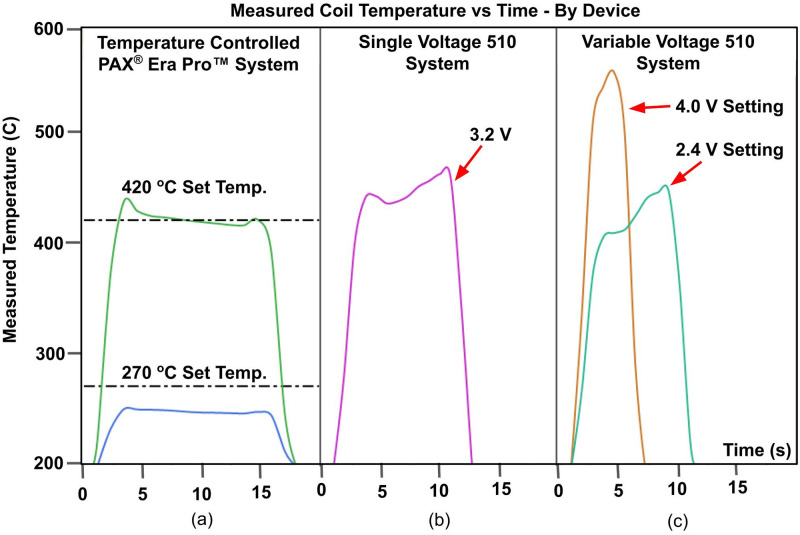
The good thing: Ready to use quickly. 20-30 seconds and you can get started. The technology also uses less power, so the battery lasts longer. PAX 3, DaVinci IQ2, XMAX V3 Pro – all conduction devices, all pretty compact.
The problem: Whatever sits directly against the hot wall gets more heat than the rest. Uneven vaporisation. You need to stir in between, otherwise it starts tasting burnt at some point. Not ideal, but acceptable for the price.
How does convection heating work?
Here, it is not the chamber that gets hot, but the air. When you draw, hot air flows through your material and carries the active compounds with it. You may know it from a fan oven – same idea.
The good thing: Even heat from all sides. Better flavour, more efficient extraction. The Tinymight 2 or Firefly 2+ deliver really good vapor. For flavour nerds, convection is usually the first choice.
The problem: More expensive, slower to heat up (30-60 seconds), and you need the right draw technique. Draw too fast? Too little vapor. Too slowly? It overheats. There is a learning curve.
What makes hybrid heating different?
The logical consequence: why not combine both? Hybrid vaporizers preheat the chamber slightly (conduction) and then send hot air through it while you draw (convection). Fast heat-up plus good flavour.
Storz & Bickel has been doing this for years: Mighty+, Crafty+, Venty. The Arizer Solo 2 also works as a hybrid. These devices are often the recommendation for beginners – uncomplicated and still with good results.
Disadvantage: The complexity costs money. Hybrid vaporizers are rarely cheap. And cleaning can be more annoying because both the chamber and the air path get dirty.
How do conduction, convection, and hybrid compare?
| Conduction | Convection | Hybrid | |
|---|---|---|---|
| Heat-up time | 20-30 sec. | 30-60 sec. | 20-40 sec. |
| Flavour | Good | Excellent | Very good |
| Price | 50-150 EUR | 200-400 EUR | 150-350 EUR |
| Learning curve | Low | Medium | Low |
Which heating method suits your needs?
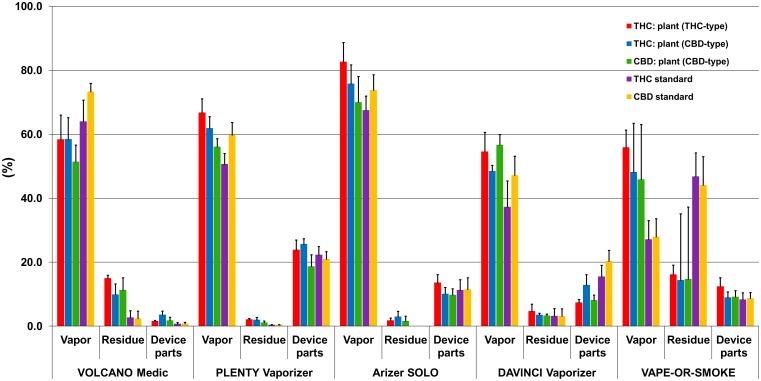
Tight budget, but need something reliable? Conduction. The XMAX V3 Pro for under 100 EUR is solid. Sure, you need to stir, but it is ready quickly and lasts a long time on one charge.
Source: Lanz et al. (2016), PLOS ONE, CC-BY 4.0
Is flavour the most important thing to you? Convection. Tinymight 2, Firefly – here you can taste every terpene. It costs more and takes practice, but the flavour is worth it if that is what matters to you.
Do you just want something that works? Hybrid. Mighty+ or Crafty+ are popular for a reason. Expensive, yes, but you get good vapor without much thought. Switch on, wait, vape.
Should you choose session or on-demand?
One more important point: conduction vaporizers are almost always session devices. You switch on, vape for 5-10 minutes, empty the chamber. Switching off in between does little – the chamber stays hot and your material keeps vaporising.
Convection can be on-demand: it only heats while you draw. One puff now, one in an hour, no problem. Often more practical for microdosers and occasional users. Material is not wasted.
Hybrid devices are usually also session-based, but more efficient than pure conduction. The preheated chamber helps at the start, while the hot-air flow ensures even extraction.
Why does temperature matter more than heating type?
Whatever the heating method: temperature control is crucial. Good conduction vaporizers have precise temperature control that reduces the main problem (uneven heat).
With convection, the temperature is more stable, but airspeed affects the result. Faster draw = cooler air reaches the material. Slower draw = more heat.
Hybrids benefit from both effects: the chamber maintains the base temperature, the airflow adds to it. Less dependent on draw technique than pure convection.
How do you maintain a conduction vaporizer?
Cleaning intervals
Conduction vaporizers require more frequent cleaning than convection devices. The direct contact between material and heating surface leads to more residue build-up. The chamber should be brushed out after every session to remove loose residue. Every 5 to 10 sessions, a thorough cleaning with isopropanol is recommended. At the latest once a month, or when there is a noticeable change in flavour, a deep clean of all components is advisable.
Wear parts in conduction devices
With conduction vaporizers, certain parts are exposed to increased wear. The chamber coating wears down over time, if there is one. Seals and O-rings near the heating chamber can become brittle from the constant heat. Screens and filters should also be checked regularly and replaced if needed.
Regular inspection and timely replacement of these parts preserves device performance.
How do you fix common conduction problems?
Uneven heating
Uneven heating is the most common complaint with conduction vaporizers. Typical signs: one side of the material appears much more extracted than the other. Vapor production fluctuates during the session, and hotspots develop in certain areas, which can even cause local combustion.
Solutions: Stir the material more often during the session and make sure it is packed evenly without excessive compression. If the problem persists, it is worth checking the heating elements — damaged or worn parts impair heat distribution. The accuracy of the temperature sensor should also be checked.
Weak vapor production
If your conduction vaporizer produces weak vapor despite the correct temperature setting, first check the material moisture — material that is too dry or too moist affects vapor quality. Make sure the chamber has good thermal contact and that no residue is covering the heating surface. Clogged screens can also restrict airflow and should be cleaned.
Battery and power problems
Conduction vaporizers draw a considerable amount of power while heating. This shows up as rapid battery drain during sessions, longer heat-up times at low battery charge, and fluctuating temperature holding. High-quality replacement batteries help. The device should not be used while charging unless pass-through charging is expressly supported. If you regularly hit the limits, you should consider upgrading to a device with a larger battery capacity.
How did conduction heating develop historically?
The pioneers of conduction
The first commercial vaporizers used conduction exclusively. Devices such as the BC Vaporizer and early models relied on simple metal chambers that were heated directly. The technology was simple, but effective.
Over time, the designs were steadily refined. Better materials provided more even heat distribution, and more precise temperature controls gave users more influence over their sessions. The devices became more ergonomic, and battery life improved with each new generation.
Modern innovations
Current conduction vaporizers use advanced materials and manufacturing techniques. Ceramic-coated chambers, multilayer heating plates and intelligent temperature sensors improve efficiency and quality considerably.
Particularly noteworthy are 3D-printed heating structures that allow optimal heat distribution. App-controlled temperature profiles enable individual adjustments via smartphone. Haptic feedback improves usability, and induction heating presents an interesting alternative to classic conduction.
What are the advanced principles behind conduction?
Heat transfer in detail
In conduction, heat transfer occurs through direct contact between two materials at molecular level. The kinetic energy of the molecules in the warmer material is transferred to molecules in the cooler material. This type of heat transfer is most efficient when there is good physical contact.
In a conduction vaporizer, this means that the plant material must directly touch the heated surface. The quality of this contact largely determines the efficiency of heat transfer. That is why packing the chamber is especially important in conduction devices.
Thermal conductivity of different materials
Different materials have different thermal conductivities. Aluminium is at the top with 205 W/(m·K) and offers very good heat conduction. Stainless steel reaches 15-25 W/(m·K), which provides moderate heat conduction. Ceramic comes in at 1-5 W/(m·K) and conducts heat rather slowly, while glass with 0.8-1 W/(m·K) has the lowest conductivity.
These differences explain why different chamber materials have different heating characteristics. Aluminium chambers heat quickly and evenly, while ceramic responds more slowly but stores heat for longer.
Heat distribution in the chamber
A common problem with conduction vaporizers is uneven heat distribution. Material in direct contact with the heated wall reaches vaporisation temperature first. Material in the centre of the chamber is heated indirectly by the surrounding material.
High-quality conduction vaporizers solve this problem in various ways. Thin-walled, narrow chambers allow better penetration through the material. Some devices use several heating elements in different positions to distribute the heat more evenly. Special chamber geometries minimise hotspots, and materials with high thermal conductivity such as aluminium also help improve the result.
How is conduction used across device categories?
Portable conduction vaporizers
Portable devices benefit most from conduction heating because of its simplicity and compact design requirements. The direct heating approach requires less complex airflow technology, making it easier to develop small, pocket-friendly devices.
Popular portable conduction vaporizers come from brands such as PAX, DaVinci and Boundless. These devices rely on all-in-one designs with simple user interfaces. They are ready quickly and use the battery particularly efficiently — exactly the qualities that matter when you are out and about.
Desktop conduction applications
Although less common in desktop devices, conduction plays a role in some designs. Desktop conduction devices typically offer larger chambers and more precise temperature control than their portable counterparts.
Pen-style conduction vaporizers
The smallest category of conduction vaporizers prioritises portability above all else. These devices often sacrifice chamber size and battery capacity in favour of discretion and convenience.
What is the future of conduction heating?
New material developments
Research into new heating materials promises further improvements. Graphene-based heating elements could revolutionise heat distribution. These ultra-thin carbon layers conduct heat extremely evenly and efficiently.
New ceramic compounds are also being researched. Zirconium dioxide coatings offer excellent temperature stability and can be heated very evenly. Silicon carbide ceramic allows even faster heat-up rates with high durability.
Integrated sensor technology
Future conduction vaporizers will be equipped with advanced sensor technology. Multiple temperature sensors in the chamber allow real-time monitoring of temperature distribution. Moisture sensors could automatically adjust the temperature to the state of the material.
Intelligent learning systems
Machine-learning algorithms are beginning to appear in premium vaporizers. These systems learn from user behaviour and automatically optimise temperature curves for individual preferences. Over time, the device adapts to provide consistently optimal sessions.
Sustainability aspects
Environmental concerns are driving innovations in conduction technology. Manufacturers are researching recyclable materials for heating chambers and reducing energy consumption through more efficient designs. Some companies now offer take-back programmes for worn components.
Why is convection called the hot-air method?
With convection heating, the plant material is heated by warmed air flowing through the chamber. The material has no direct contact with the heating element.
How it works
A separate heating element warms the air before it flows through the material. The air is heated to the desired temperature and the airflow carries this heat evenly through the entire material. This lets the active compounds vaporise evenly, and the material is effectively heated from the inside out — the opposite of conduction.
Advantages of convection
Convection offers even extraction without hotspots and therefore more consistent results. The lower risk of combustion provides better flavour throughout the session. In addition, the material is used more efficiently because the heat penetrates evenly. Many convection devices offer on-demand operation, where the heating process stops immediately — saving material.
Disadvantages of convection
The more complex technology is reflected in the price — convection devices cost more. Heat-up time is longer because the air has to be heated first. More components also mean more parts that can fail. And draw technique is more important than with conduction: slow, even draws deliver the best results.
Popular convection vaporizers
| Device | Type | Price | Special feature |
|---|---|---|---|
| Tinymight 2 | Portable | ~300 EUR | On-demand, replaceable battery |
| Firefly 2+ | Portable | ~250 EUR | App control, fast heat-up |
| Arizer Solo 2 | Portable | ~150 EUR | Glass vapor path, long battery life |
| Volcano | Desktop | ~400-600 EUR | Balloon system, medically certified |
How can you optimize the conduction experience?
With the right techniques, you can get the most out of your conduction vaporizer.
Grind and packing
The grind should be medium-fine — not too fine or the chamber will clog, not too coarse or the material will heat unevenly. When packing, press down lightly, but not too firmly: conduction works best with a full chamber. After 2-3 draws, it is worth stirring the material to achieve even extraction.
Temperature management
Optimal temperature strategies for conduction:
| Phase | Temperature | Result |
|---|---|---|
| Start | 175-185°C | Terpenes, flavour |
| Middle | 185-195°C | Balanced effects |
| End | 195-210°C | Complete extraction |
Draw technique
It is best to draw slowly and evenly, about 10-15 seconds per draw. Drawing too quickly cools the chamber and reduces vapor production. Take short pauses between draws so the chamber can return to temperature.
Which conduction brands and models are best?
PAX (premium conduction)
PAX Labs is known for elegant design and ease of use. The PAX Plus offers dual-use for herbs and concentrates with app control, while the PAX Mini is more compact and focuses on herbs — ideal for beginners. The brand’s strengths lie in design, discretion and vapor quality. However, PAX devices need frequent cleaning, and prices are at the upper end.
DaVinci (innovative conduction)
The DaVinci IQ2 stands out with dosage calculation and a zirconia vapor path for pure flavour. The Miqro-C is ultra-compact and offers a replaceable battery. DaVinci scores with innovative features and good build quality, although operation is more complex than with other brands and there is a certain learning curve.
Boundless (value for money)
Boundless offers good value for money. The CFX has a large chamber and heats up quickly, while the CFV delivers full convection at a moderate price. The strength clearly lies in the price-performance ratio, although the materials used do not quite reach premium level.
What should you buy based on heating method?
When to choose conduction?
Conduction is suitable if the budget is limited and you are looking for more affordable entry-level models. Anyone who prefers session-based vaping and values compact devices with simple operation is well served here.
When to choose convection?
Convection is the right choice if flavour is the highest priority. On-demand use allows flexible vaping, but requires willingness to make a higher investment. A bit of experience with vaporizers is an advantage, as draw technique plays a role.
When to choose hybrid?
Hybrid is ideal if you want the best of both worlds. These devices suit versatile use in session and partly on-demand operation. The prerequisite is a budget for premium devices — in return, you get uncompromising vapor quality.
Recommendations by budget
| Budget | Conduction | Convection | Hybrid |
|---|---|---|---|
| Under 100 EUR | XMAX V3 Pro | — | — |
| 100-200 EUR | PAX Mini, DaVinci Miqro | Arizer Solo 2 | POTV Lobo |
| 200-300 EUR | PAX Plus | Tinymight 2, Firefly 2+ | Crafty+ |
| Over 300 EUR | — | Volcano Classic | Mighty+, Venty |
When does each heating method work best?
Conduction for medical users
Medical users have special requirements. Dosing capsules allow precise and consistent dosing. Session-based devices deliver reproducible results for even medication. Certified devices such as the Storz & Bickel Mighty Medic or Volcano Medic meet medical standards.
Convection for flavour enthusiasts
If you want maximum flavour, it is best to start at low temperatures of 165-175°C to enjoy the full terpenes. On-demand devices deliver fresh flavour with every draw, and a glass vapor path ensures the purest flavour without foreign aromas.
Hybrid for versatility
Those with different usage scenarios benefit from the hybrid approach. On the go, the conduction component ensures immediate vapor production during quick sessions. At home, the convection component delivers better flavour and higher efficiency. Hybrid devices also shine in group use with consistent results.
What does the science say about heating methods?
Thermodynamics of vaporisation
Several physical processes work together when vaporising plant material. In heat conduction (conduction), heat transfer takes place through direct contact between the heating surface and the material. In heat flow (convection), moving air transports the heat. Thermal radiation plays only a minor role at the temperatures found in vaporizers.
Boiling points of active compounds
Different compounds vaporise at different temperatures:
| Compound | Boiling point | Effect |
|---|---|---|
| THC | 157°C | Psychoactive, analgesic |
| CBD | 160-180°C | Anti-inflammatory, calming |
| CBN | 185°C | Sedating |
| Myrcene | 167°C | Relaxing |
| Limonene | 177°C | Mood-lifting |
| Linalool | 198°C | Calming |
Extraction efficiency
Studies show different extraction rates depending on the method. Conduction achieves 70-85% active compound extraction when used optimally. Convection reaches 80-95%, and hybrid devices are at a similar level with 85-95%. By comparison, with combustion only 25-35% of the active compounds reach the lungs.
What are the most common mistakes with vaporizers?
Conduction: Typical problems
| Problem | Cause | Solution |
|---|---|---|
| Burnt taste | Temperature too high, packed too tightly | Lower temperature, pack more loosely |
| Little vapor | Packed too loosely, temperature too low | Pack more firmly, increase temperature |
| Uneven browning | Material not stirred | Stir regularly |
| Clogged | Ground too finely | Use a coarser grind |
Convection: Typical problems
| Problem | Cause | Solution |
|---|---|---|
| No vapor despite heat | Drew too quickly | Draw more slowly and evenly |
| Material flies upwards | Drew too hard | Draw more gently, use a screen |
| Vapor too hot | Short vapor path | Water filter or longer mouthpiece |
| Flavour fades | Screens clogged | Clean or replace screens |
How do all three heating methods compare side by side?
Conduction at a glance
Conduction impresses with more affordable entry prices and fast heat-up times. The devices are compact and easy to use. On the other hand, regular stirring is necessary, and there is a certain risk of combustion if you are careless.
Convection at a glance
Convection delivers the best flavour and the most even extraction. On-demand operation is possible, and material use is the most efficient. In return, prices are higher, and the correct draw technique has to be learned first.
Hybrid at a glance
Hybrid devices offer the best vapor production and are suitable for versatile use. They are fast, efficient and forgiving of user error. The downside: they usually belong to the highest price class, and maintenance can be a bit more involved.
The best choice for beginners
For newcomers, we often recommend a mid-range hybrid vaporizer (e.g. Storz & Bickel Crafty+ or POTV Lobo). These forgive beginner mistakes, offer good flavour and are versatile.
Anyone with a limited budget will find a solid starting point with a good conduction device such as the XMAX V3 Pro or PAX Mini.
Which accessories work best for each heating method?
For conduction vaporizers
Dosing capsules simplify handling, ensure consistent dosing and reduce cleaning effort. Replacement screens should be changed regularly to ensure optimal airflow. A cleaning kit with brushes, isopropanol and cotton buds is part of the basic equipment. A grinder with a medium-fine consistency is ideal for conduction, and anyone with a replaceable battery should keep a spare battery ready for longer sessions.
For convection vaporizers
A water pipe adapter (WPA) cools the vapor and makes it smoother. Glass stems in different lengths make it possible to adjust vapor temperature. Pre-filled dosing tubes are practical on the go, and cleaning caps protect the mouthpieces after use.
Universal accessories
A storage case offers protection and discretion on the go. Boveda packs keep the plant material at an optimal 62% humidity. A USB-C fast charger shortens waiting time with compatible devices, and aroma chamber lids allow odour-neutral storage.
What are the biggest myths about heating methods?
Myth 1: “Convection is always better”
Reality: Convection offers advantages in flavour and efficiency, but high-quality conduction devices such as the PAX 3 or DaVinci IQ2 also deliver excellent results. The best method depends on individual preferences.
Myth 2: “Hybrid vaporizers are just marketing”
Reality: True hybrid devices such as the Mighty+ really do combine both heating methods. The conduction element ensures fast heat-up, while convection ensures even extraction.
Myth 3: “Cheap conduction vaporizers burn the material”
Reality: Even affordable devices with reasonable temperature control vaporise reliably. What matters is correct use: do not start too hot, do not pack too tightly.
Myth 4: “Convection always takes a long time to heat up”
Reality: Modern on-demand convection devices such as the Tinymight 2 or Firefly 2+ heat up in under 5 seconds. The technology has developed considerably.
Which heating method should you choose?
There is no “best” heating method – only the right one for your situation. If you need something quick and affordable on the go: conduction. If you have time at home and want flavour: convection. If you just want good vapor without hassle and have the budget: hybrid.
In the end, what matters is that you find a vaporizer you enjoy using. Try different methods if you can – many people eventually own more than one vaporizer for different situations.
What are the best vaporizers for each heating method?
Best conduction vaporizers: PAX Plus, DaVinci IQ2, XMAX V3 Pro, Boundless CFX
Best convection vaporizers: Tinymight 2, Firefly 2+, Elev8R
Best hybrid vaporizers: Mighty+, Crafty+, Venty, Arizer Solo 2
What scientific research supports these findings?
- Lanz, C. et al. (2016). Medicinal Cannabis: In Vitro Validation of Vaporizers for the Smoke-Free Inhalation of Cannabis. PLoS ONE, 11(1), e0147286. PubMed 26784441
- Hazekamp, A. et al. (2006). Evaluation of a Vaporizing Device (Volcano) for the Pulmonary Administration of Tetrahydrocannabinol. Journal of Pharmaceutical Sciences, 95(6), 1308–1317. PubMed 16637053
- Pomahacova, B. et al. (2009). Cannabis Smoke Condensate III: The Cannabinoid Content of Vaporised Cannabis sativa. Inhalation Toxicology, 21(13), 1108–1112. PubMed 19852551
Related articles: Best convection vaporizers · Best conduction vaporizers · Best hybrid vaporizers · Best session vaporizers
Frequently asked questions
Which is better: conduction or convection?
Convection delivers better flavour and more even extraction. Conduction is cheaper and simpler. Hybrid combines both — the choice depends on budget and priorities.
Which heating method for beginners?
Conduction or hybrid. Conduction vaporizers are straightforward: switch on, wait, vape. Pure convection requires draw technique.
Why are convection vaporizers more expensive?
The technology is more elaborate. Hot air has to be guided precisely through the material, which requires more complex constructions.
- Mighty+ vs Volcano Hybrid: Portable or Desktop?
- Arizer Solo 3 vs Crafty+: Which Is Better?
- TinyMight 2 vs Venty: On-Demand or Session?
- DynaVap M7 vs XMAX V3 Pro
- Crafty+ vs Venty
- PAX Plus vs Mighty+: Budget or Premium?
- Volcano Classic vs Hybrid: Analog or Digital?
- Arizer Air Max vs Solo 3: Which Arizer?
- PAX Plus vs Venty: Budget or Premium?
- Crafty+ vs PAX Plus: Which Is Worth More?
- Arizer Solo 3 vs Venty: Glass or Comfort?