Prices tracked daily across 100+ shops. Last reviewed: March 2026.
DynaVap vs Sticky Brick
If you’re looking into butane vaporizers, two names come up over and over: DynaVap and Sticky Brick. Both need a torch lighter, both work without batteries or cables — and that’s about where the similarities end. One side relies on a small metal tube with a click mechanism. The other uses handcrafted wooden blocks with pure convection heating. Two completely different approaches, same goal.
In this comparison, we look at where the differences actually matter. Not just on paper, but in daily use. Which one vapes better? Which is easier to learn? And which vaporizer suits which kind of user?
The Concept: Click vs. Flame Technique
DynaVap — The Click Tells You When
The DynaVap M7 principle is dead simple: heat the metal cap with a torch, and after a few seconds you hear a “click.” That’s your signal — inhale now. When it clicks again, the draw is over. No guessing, no thermometer needed.
Heating works through a combination of conduction and convection. The cap transfers heat directly to the material while hot air simultaneously flows through the chamber. Depending on where you aim the flame — closer to the tip for lower temperatures, closer to the base for higher — you change the result.
Sticky Brick — Pure Convection, Pure Technique
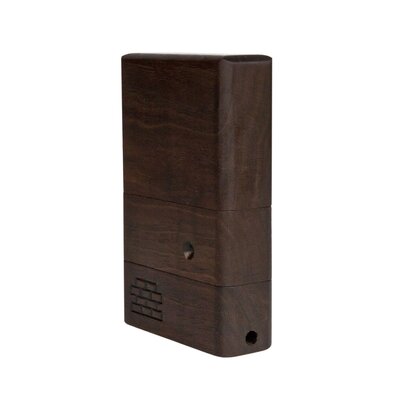
The Sticky Brick Junior works in a fundamentally different way. You point a torch lighter’s flame into an air intake, hot air rushes through the material, and you inhale at the same time. No click, no audible signal. You control the temperature through the flame distance, the angle, and how hard you draw.
It sounds more complicated than it is — but it’s not trivial either. During the first few tries, almost everyone ends up with material that’s either too dark or slightly combusted. After a handful of sessions though, the technique clicks (figuratively), and then the Sticky Brick delivers something few other portable vaporizers can match: dense, flavorful convection clouds on demand. Well, on flame-demand.
Vapor Quality: Flavor and Clouds
The Sticky Brick Junior (convection) preserves terpenes noticeably better below 190 °C, heating material only when you inhale. The M7 (hybrid) produces visible vapor from the first draw with any technique. Heat-up: M7 7s vs. Sticky Brick Junior 3s.
This is where things really separate — and the Sticky Brick comes out ahead. Pure convection means the material only gets heated when air flows through it. No residual cooking, no combustion between draws. The flavor stays extremely clean, especially on the first pulls of a fresh load.
The Sticky Brick Runt takes it a step further. Its design resembles a small bong, and the vapor path is so short that clouds arrive particularly dense. Many users describe the Runt as the device that comes closest to a bong hit — just without combustion.
The DynaVap M7 delivers good flavor too, no question. But the conduction element means the herbs keep cooking slightly after the click. You notice this from the third or fourth draw onward. The clouds are smaller, more concentrated. For users who prefer milder, controlled draws, that can actually be an advantage.
Portability: Pocket or Backpack?
DynaVap wins this category hands down. The M7 is barely larger than a thick pen, weighs almost nothing, and fits in any pocket. With the cap on, the chamber is sealed — nothing spills out, nothing smells. Pull out a torch on the go, heat for three seconds, click, done.
The Sticky Brick Junior is “portable” in the loosest sense. It fits in a jacket pocket, but it’s not comfortable there. The wood construction is sturdy but also bulky. Glass parts are built in that can break if dropped. And loading it requires both hands plus a bit of calm.
The Sticky Brick OG, the full-size model, stays at home no matter what. A beautiful piece of handcraftsmanship with a lifetime warranty — but portable? No.
Learning Curve: Click-and-Go vs. Flame School
The DynaVap is among the most beginner-friendly vapes out there. The click mechanism takes the most critical decision out of your hands: when to stop heating. Even on your very first try, you’ll get usable vapor. The technique refines over time — exactly where you aim the flame, how fast you rotate — but the basics work right away.
With the Sticky Brick, things are different. The first three to five sessions are a learning process. Too close with the flame? Combustion. Too far away? No vapor. Drew too hard? Flame goes out. Not hard enough? Too hot. This isn’t a design flaw; it’s part of the concept. Once you master the technique, you have total control over every single draw. But getting there requires patience.
A community tip: beginners should always use a single-flame lighter with the Sticky Brick. Triple or quad flames make temperature control unnecessarily difficult.
Efficiency and Chamber Size
The DynaVap M7 has a tiny chamber of about 0.1g. That sounds like very little — and it is. But that’s precisely what makes the DynaVap the microdosing king. One or two draws, done, the chamber is evenly extracted. For users who want to stretch their material, there’s hardly anything better.
If you prefer larger sessions, look at the DynaVap HyperDyn. With its 0.25g chamber, it reaches a similar range as the Sticky Brick models, making the comparison fairer.
The Sticky Brick models all have larger chambers. The Junior holds roughly 0.15 to 0.2g, the OG a bit more. Thanks to pure convection, the material doesn’t get consumed automatically — you can stop after each draw and come back later without anything cooking in between. In practice, this means both systems are efficient with material, just in different ways.
Comparison Table
Price Comparison: What Do They Cost?
Both brands play in a similar price range. The DynaVap M7 typically sits between 75 and 90 euros. The Sticky Brick Junior runs in the 90 to 120 euro range. The Sticky Brick OG costs a bit more but offers the lifetime warranty and full-size format.
If you want to run the DynaVap with an induction heater — meaning no lighter needed — add another 80 to 150 euros on top. That changes the equation, obviously.
Current prices from over 70 shops across Europe are available anytime on vapochecker.com.
Who Should Get What?
DynaVap, if you…
- want a hassle-free entry into butane vapes
- are often on the move and need something compact
- want to be efficient with material (microdosing)
- enjoy tinkering and like the ecosystem of tips, stems, and caps
- want to keep the induction heater option open for later
Sticky Brick, if you…
- want maximum flavor and dense clouds
- mainly vape at home
- want full control over every single draw
- are willing to learn a technique
- prefer a handcrafted wooden device over a metal tube
Why Not Both?
That’s actually the answer many experienced users give. A DynaVap for on-the-go and quick single draws. A Sticky Brick for the relaxed evening session at home. The two devices complement each other rather than competing. And since both cost under 120 euros, the combination is cheaper than many premium battery vaporizers.
Verdict
DynaVap and Sticky Brick follow fundamentally different philosophies. The DynaVap tells you with a click when it’s time. The Sticky Brick lets you control everything yourself — flame, airflow, timing. In return, it rewards you with vapor quality that’s hard to match in the butane category.
If you value simplicity, portability, and microdosing, the DynaVap M7 will make you happy. If you’re willing to invest a few sessions into the learning curve and want to pull dense convection clouds from a handcrafted wooden block, go for the Sticky Brick Junior — or the Runt if you want them even denser.
There’s no clear winner here. Just two very different ways to experience butane vaping. On vapochecker.com you can compare current prices for both brands and find the best deal in your country.
Last updated: February 2026. Prices and availability may vary by shop.
Price History: Sticky Brick vs DynaVap
Overview of all 29 comparison articles — find the perfect device for you.
Frequently Asked Questions
Daily Use and Practicality
In everyday use, heat-up time shapes your routine more than any spec sheet suggests. The Sticky Brick Junior reaches operating temperature in 3 seconds, while the M7 needs 7 seconds. That difference adds up over weeks of daily sessions. Quick morning sessions before work favor the faster device; relaxed evening sessions make the gap irrelevant.
Consider your typical usage pattern. If you vaporize 3-5 times daily, a few seconds per session compound into meaningful time savings. If you have one session per evening, both devices serve equally well. The Sticky Brick Junior rewards impulsive, grab-and-go use. The M7 rewards users who plan their sessions.
Build Quality and Materials
The M7: Machined titanium and stainless steel built to last decades. DynaVap devices have no electronics, no batteries, and no parts that degrade over time. The precision-machined tip is the heart of the system. With basic care, a DynaVap can outlast any electronic vaporizer.
The Sticky Brick Junior: Well-built device with solid materials.
Water Pipe Compatibility
The M7 supports water pipes, the Sticky Brick Junior does not. For users who value water filtration, this is a clear advantage for the M7. WPA adapters are available for 14mm and 18mm joints.
Cleaning and Maintenance
Regular cleaning directly affects vapor flavor and device longevity. Both the M7 and Sticky Brick Junior benefit from weekly isopropyl alcohol soaks of removable parts. Screens and seals are consumable items that should be replaced every few months for optimal performance. A basic cleaning kit consisting of isopropyl alcohol (90 percent or higher), cotton swabs, and pipe cleaners covers most devices.
A clean device delivers noticeably better flavor than a neglected one. Most flavor complaints in online forums trace back to insufficient cleaning rather than device limitations. Residue buildup narrows the vapor path, increases draw resistance, and adds a stale taste. Budget 10 minutes per week for maintenance and both devices will perform at their best for years. Deep cleaning every 2-4 weeks prevents hard-to-remove buildup and keeps the airflow unrestricted.
Long-Term Value and Durability
A vaporizer is a long-term investment. Beyond the purchase price, consider replacement parts, cleaning supplies, and eventual battery degradation. The Sticky Brick Junior has the longer warranty at 99 years versus 2 years for the M7.
The resale market for vaporizers is active. Well-maintained devices from reputable brands retain 50-70 percent of their original value after a year. Both the M7 and Sticky Brick Junior hold their value well due to brand reputation and build quality. Buying a quality device upfront typically costs less than cycling through cheaper alternatives.
Community support also factors into long-term value. Devices with large user bases have better troubleshooting resources, aftermarket accessories, and replacement part availability. Both brands covered here have established communities that make ownership easier over the years.
Related Comparisons
- PAX Mini vs DynaVap M7: Budget Vaporizer Showdown 2026
- PAX Plus vs DynaVap M7: Digital vs Analog
- Crafty+ vs DynaVap M7: S&B Comfort or Butane Freedom?
- Venty vs DynaVap M7: Premium Electric or Budget Butane?
- Mighty+ vs DynaVap M7: Electric or Butane?
Who Should Buy Which?
- Off-grid users (camping, travel): M7. Maximum comfort: Sticky Brick Junior.
- Long-term security: Sticky Brick Junior with 99-year warranty.
Frequently Asked Questions
Is the M7 better than the Sticky Brick Junior?
Which heats up faster: M7 or Sticky Brick Junior?
Which has the better warranty?
Testing and comparing vaporizers at VapoChecker since 2020. 800+ devices, 274 shops, 51 countries.